The Barcode is Evolving: Here's What It Means for Your Brand
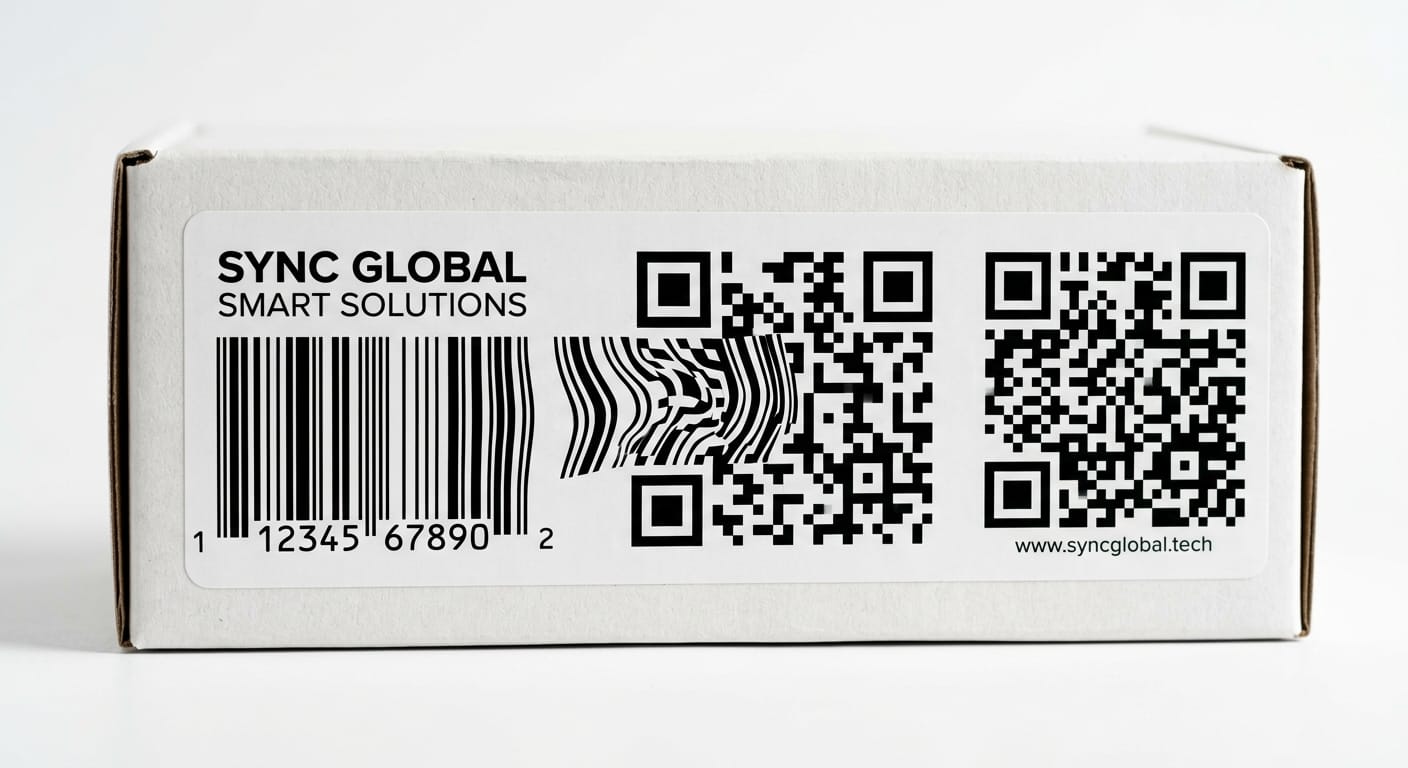
The barcode on the back of your product has looked the same since 1974. That black-and-white stripe pattern - the UPC - was designed to speed up grocery checkout lines. It did that job remarkably well. So well, in fact, that it hasn’t fundamentally changed in over fifty years.
That era is ending.
GS1, the global standards organization that manages the barcode system, is leading a transition from traditional 1D barcodes to 2D barcodes - specifically QR codes powered by a standard called GS1 Digital Link. The target date is 2027. Major retailers including Walmart, Kroger and Target are already onboard. And the implications for every brand that puts a product on a shelf are significant.
GS1 has put together an excellent overview of what’s coming:
If you only watch one video about the future of product packaging, make it that one.
What’s Actually Changing
Today, a UPC barcode encodes exactly one thing: a GTIN (Global Trade Item Number). That’s the 12- or 14-digit number that identifies a product. Scan it at checkout and the point-of-sale system looks up the price. That’s the entire interaction.
A 2D barcode - a QR code, specifically - can carry dramatically more information in the same physical space. Under the GS1 Digital Link standard, a single QR code can encode:
- GTIN - the product identifier (same as today)
- Batch/Lot number - which production run this unit came from
- Expiration date - when this specific unit expires
- Serial number - a unique identifier for this individual item
- A URL - a web address that connects the physical product to digital content
That last one is the game-changer. The QR code on your product isn’t just a number anymore - it’s a live link to the internet. And GS1 Digital Link is the standard that defines what that URL looks like and how it behaves.
Here’s a concrete example. A traditional UPC encodes this:
00614141123452
A GS1 Digital Link URL encodes this:
https://gtin.one/01/00614141123452/10/ABC123/21/12345?exp=261231
Same GTIN, but now with the batch number (ABC123), serial number (12345), and expiration date (2026-12-31) - all in a single scan.
The transition timeline is called Sunrise 2027. By the end of 2027, all major point-of-sale systems are expected to accept 2D barcodes at checkout. This doesn’t mean 1D barcodes disappear overnight - the transition will take years - but 2027 is the inflection point where retailers begin requiring 2D readiness from their supply chains.
Why This Matters for Brands
If you’re a brand manager reading this, you might be thinking: “Okay, it’s a different barcode format. My packaging team will handle it.” That understates the opportunity - and the risk - considerably.
Consumer expectations are expanding
When someone scans a QR code on your product, they expect something useful on the other side. Ingredient details. Sourcing transparency. Sustainability claims. Cooking instructions. Allergen information in their language. The 2D barcode turns your packaging into an interactive surface. Brands that invest in that experience will differentiate. Brands that serve a blank page or a generic corporate homepage will not.
Compliance is tightening
Multiple regulatory frameworks are converging on item-level traceability:
- FSMA 204 (FDA, United States) - requires key data elements for foods on the Food Traceability List, traceable to the lot level. Enforcement is underway.
- EU Digital Product Passport (DPP) - will require product-level sustainability and circularity data accessible via a digital link. Phased rollout begins 2026.
- DSCSA (Drug Supply Chain Security Act, United States) - requires serialization and electronic tracing for prescription drugs, with full enforcement as of November 2023.
These aren’t hypothetical. They’re law. And GS1 Digital Link is the mechanism most of them point to for encoding and resolving that data.
Recalls become instant
Today, a product recall is a slow, expensive, imprecise process. The brand issues a notice. Retailers pull product from shelves by GTIN or lot number. Consumers check a list. Most affected product is never actually returned.
With serialized 2D barcodes and a resolver, recalls change fundamentally. When a consumer scans a recalled product, the resolver can detect the specific batch or serial number and respond in real time - serving a recall notice, return instructions or a replacement offer. No list-checking. No ambiguity. The product itself tells the consumer it’s been recalled.
PepsiCo, one of the early movers in this space, has spoken publicly about using 2D barcodes to improve both consumer engagement and supply chain visibility. When a company of that scale commits to the transition, it signals that this is operational reality, not a pilot program.
Your QR code becomes a permanent marketing asset
Here’s something most brands don’t think about yet: if your QR code points to a resolver you control, you can change what it does after the product ships. Launch a promotion six months after a product hits shelves. Swap landing page content by season. Serve different experiences to consumers in different countries. Redirect traffic when a campaign ends. The QR code printed on your packaging never changes, but the experience behind it can change as often as you need.
That’s the difference between a static QR code (which points to a fixed URL) and a resolved QR code (which points to a URL that intelligently routes the request). GS1 Digital Link is designed for the latter.
The Missing Piece
GS1 Digital Link defines the format - what the URL looks like, what identifiers it contains, how applications should interpret it. It’s a standard and a good one.
But a standard doesn’t do anything by itself. Someone needs to actually host the URL, receive the scan, interpret the request and serve the right response. That’s what a resolver does.
Think of it like DNS for products. DNS translates domain names into IP addresses. A GS1 Digital Link resolver translates product identifiers into the right digital experience - and it does it differently depending on who’s asking, where they are, what language they speak and what application they’re using.
The GS1 Digital Link specification defines a set of conformance levels for resolvers. A conformant resolver must handle content negotiation (serving different responses to a browser vs. an API client vs. a point-of-sale system), support the full GS1 URI syntax and respond with appropriate link headers. This is not trivial infrastructure. It’s a specialized service that sits at the intersection of supply chain standards, web infrastructure and consumer experience.
How Closient Fits
We built Closient as a commercial-grade GS1 Digital Link resolver because we saw this gap clearly: brands were going to need resolver infrastructure and building it in-house would be expensive, time-consuming and easy to get wrong.
Here’s what Closient provides:
Full GS1 Digital Link conformance. We resolve the complete GS1 URI syntax - GTINs, batch/lot numbers, serial numbers, expiration dates and all GS1 Application Identifiers. If a scanner or application sends a GS1 Digital Link URI, we handle it correctly.
Content negotiation. The same URL serves different responses depending on who’s asking. A consumer with a phone gets a product landing page. A retail system gets structured JSON-LD. A supply chain application gets an API response. One URL, many responses - exactly as the specification intends.
Geo-routing. A consumer scanning your product in France can get a French-language experience with EU-specific regulatory information. A consumer scanning the same product in Texas gets English with US-specific details. Same QR code. Same GTIN. Different experience, automatically.
Language detection. Beyond geography, we detect the consumer’s browser language preferences and serve content accordingly. Your product speaks your customer’s language without you printing separate packaging for every market.
Time-based rules. Run a promotion that starts and ends on specific dates. Serve different content during a product launch window. Change the experience after a sell-by date passes. The QR code is static; the experience is dynamic.
Recall detection. When a product is recalled, affected batch or serial numbers can be flagged in the resolver. Any scan of an affected product triggers a recall response immediately. No delay. No ambiguity. No dependence on consumers checking a website.
Permanent QR codes. Because your QR code points to a resolver URL you manage through Closient, the code printed on your packaging never goes stale. Products sitting in a warehouse for two years still resolve correctly when they finally reach a consumer. The resolver is the source of truth and it’s always current.
The Transition Isn’t Coming - It’s Here
Sunrise 2027 is less than a year away. Walmart has already updated its point-of-sale systems. GS1 US is running implementation pilots. The FDA is enforcing FSMA 204. The EU is finalizing Digital Product Passport requirements.
If your brand sells physical products, this transition will affect you. The question isn’t whether to prepare - it’s how quickly you can get infrastructure in place that handles the new standard correctly and gives you flexibility as requirements evolve.
We built Closient to make that straightforward.
Start for free. Set up your first GS1 Digital Link in minutes, not months.