Why We Built Closient
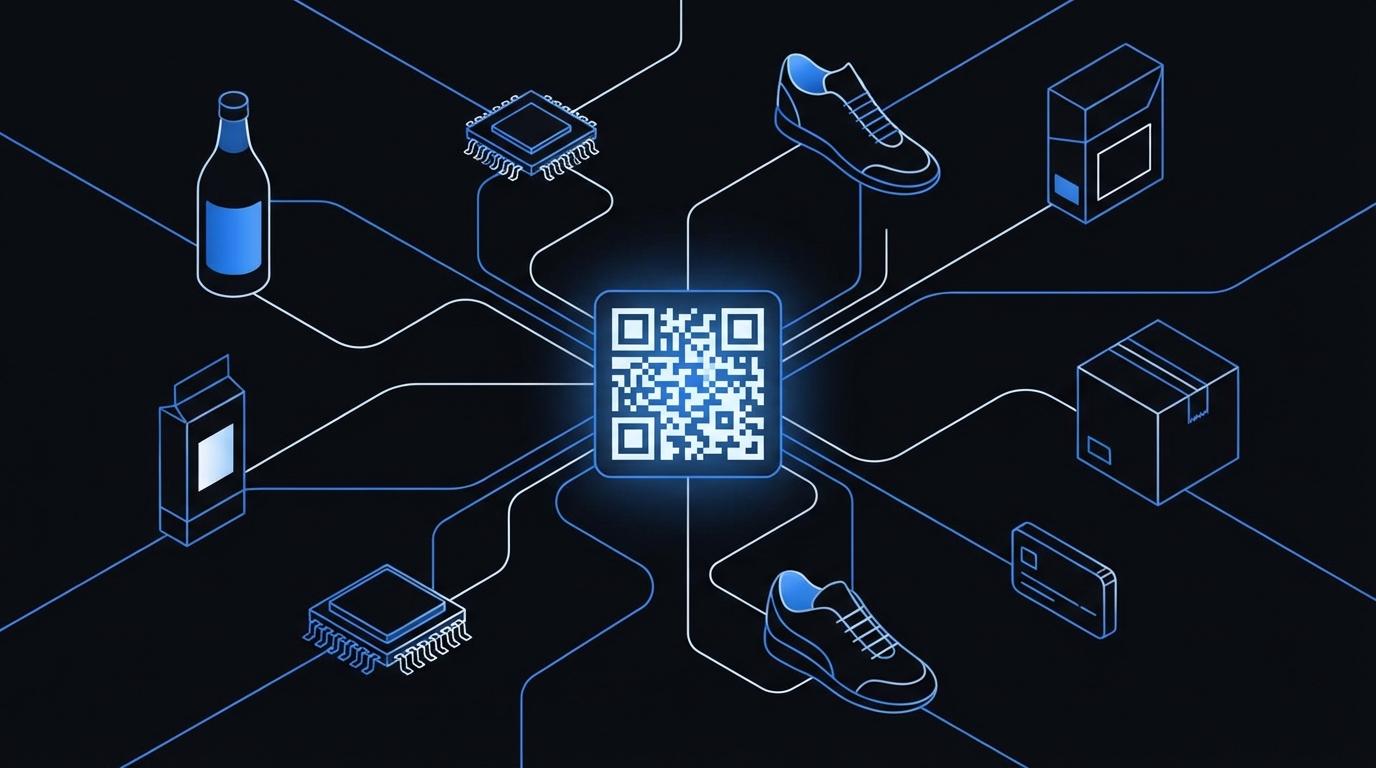
In 2023, GS1 announced the most significant change to product identification in fifty years. The barcode — that familiar set of black and white stripes on every product you’ve ever bought — was getting a successor. A QR code powered by something called GS1 Digital Link.
The concept was elegant. Every product gets a URL. That URL encodes the product identifier, batch number, serial number, and expiration date. Scan it, and the URL resolves to whatever information the context demands — a product page for a consumer, structured data for a point-of-sale system, traceability records for a regulator.
We read the specification and immediately saw the gap.
The standard was ready. The infrastructure wasn’t.
GS1 Digital Link defines what the URL looks like. It defines what data goes into the QR code. It defines how applications should interpret the response. What it doesn’t do is host anything.
Someone has to actually run the URL. When a consumer in Munich scans a QR code on a jar of peanut butter, something has to receive that request, figure out what language the consumer’s phone is set to, determine that the product is sold in Germany, check whether it’s been recalled, and serve the right response — all in under 200 milliseconds.
That something is called a resolver. And when we started looking for one, we found almost nothing.
What we found when we went looking
There were a handful of options. GS1 member organizations offered basic resolvers, but they were reference implementations — proof that the standard works, not production infrastructure. A few companies had built proprietary systems, but they were locked into specific verticals or required enterprise sales cycles measured in quarters.
If you were a brand with 50 products and wanted to put GS1 Digital Link QR codes on your packaging next month, your options were:
- Build it yourself (months of engineering, ongoing maintenance, compliance testing)
- Wait for your GS1 member organization to offer something production-ready (no timeline)
- Use a generic QR code service that doesn’t understand GS1 syntax (not conformant)
- Don’t do it yet (but Sunrise 2027 is coming)
None of these were acceptable. The standard was good. The timeline was real. Retailers were already testing 2D barcode scanning at checkout. The only missing piece was the infrastructure layer between “we have a standard” and “brands can actually use it.”
So we built it
We started with two questions. What does a production-grade GS1 Digital Link resolver actually need to do? And what would make it simple enough that a brand manager — not a developer — could set it up?
The first question had a long answer. A conformant resolver needs to handle the full GS1 URI syntax, including all application identifiers. It needs content negotiation — serving HTML to a browser, JSON-LD to an application, and linkset to a GS1-conformant client. It needs to resolve at the GTIN level, the batch level, and the serial level. It needs to be fast, because the person scanning a QR code in a grocery store isn’t going to wait three seconds for a page to load.
The second question had a simpler answer: make it work the way DNS works. You configure records. The system resolves them. You don’t need to understand the protocol to use it.
That’s what Closient is. A resolver that handles the complexity of the GS1 Digital Link specification while presenting a straightforward interface for managing what your QR codes do.
What “commercial-grade” actually means
We use that phrase deliberately, because it communicates something specific about what we built versus what existed before.
Conformance. We implemented the full GS1 Digital Link URI specification, including all Application Identifiers — not just GTIN, but batch/lot, serial number, expiration date, and the rest. We pass the GS1 conformance test suite. This matters because point-of-sale systems and supply chain applications expect conformant responses, and a resolver that handles 80% of the spec correctly handles 0% of it usably.
Content negotiation. The same URL serves different responses depending on who’s asking. A consumer with a phone gets a product page. A retail system doing inventory gets JSON-LD. A GS1 resolver network node gets a linkset header. The resolver figures out what the client needs and responds accordingly. One URL, many responses.
Geographic intelligence. A scan in France gets a French-language experience with EU regulatory information. A scan of the same product in Texas gets English with US-specific details. The QR code printed on the packaging is identical. The resolver handles the differentiation.
Temporal rules. Content can change based on time. Launch a promotion that starts and ends on specific dates. Serve different content after a sell-by date passes. The QR code is static. The experience behind it is dynamic.
Recall detection. When a product is recalled, affected batch or serial numbers are flagged in the resolver. Any scan of an affected product triggers a recall response immediately. This isn’t a feature we added because it seemed useful. It’s a feature we added because people’s health depends on it.
Permanence. A QR code printed on packaging today might be scanned in 2040. The resolver URL needs to work for as long as the product exists in the world. That’s not a technical problem — it’s a business model problem. We built Closient to be infrastructure that lasts, not a startup that pivots.
What we learned along the way
Building a resolver taught us things that aren’t in any specification.
We learned that brands don’t think in terms of “application identifiers” and “link relation types.” They think in terms of “what happens when someone scans my product?” The gap between the technical standard and the business need is where most of the product design work lives.
We learned that the food industry and the pharmaceutical industry have almost identical compliance requirements but completely different vocabularies for describing them. FSMA 204 and DSCSA are asking for the same thing — item-level traceability — but the people implementing them don’t read each other’s trade publications.
We learned that permanence is the hardest promise in technology. Saying “this URL will work in 2050” means making commitments about infrastructure, business continuity, and economic sustainability that most software companies never think about. We think about it constantly.
And we learned that the biggest barrier to adoption isn’t technical complexity. It’s the perception that “we’ll deal with it when we have to.” Sunrise 2027 is less than a year away. The EU Digital Product Passport is in phased rollout. FSMA 204 enforcement is active. The regulatory deadlines that seemed distant are arriving, and the brands that waited are now scrambling.
Where this is going
We believe every physical product will have a digital identity within the next decade. Not because of any single regulation or retail mandate, but because the economics of product data are changing.
When a QR code on your product connects to a resolver, you’re not just complying with a standard. You’re creating a data channel between your brand and every person who interacts with your product. You know where your products are being scanned, in what languages, at what times. You can communicate directly with consumers without a retailer intermediary. You can execute recalls in hours instead of weeks. You can prove sustainability claims with verifiable data instead of marketing copy.
GS1 Digital Link is the standard that makes this possible. Closient is the infrastructure that makes it practical.
We built it because we saw the gap between what the industry agreed should happen and the infrastructure that would actually make it happen. That gap is closing. If you sell physical products, the transition is coming whether you prepare or not.
We’d rather you were ready.
Get started with Closient — set up your first GS1 Digital Link in minutes.